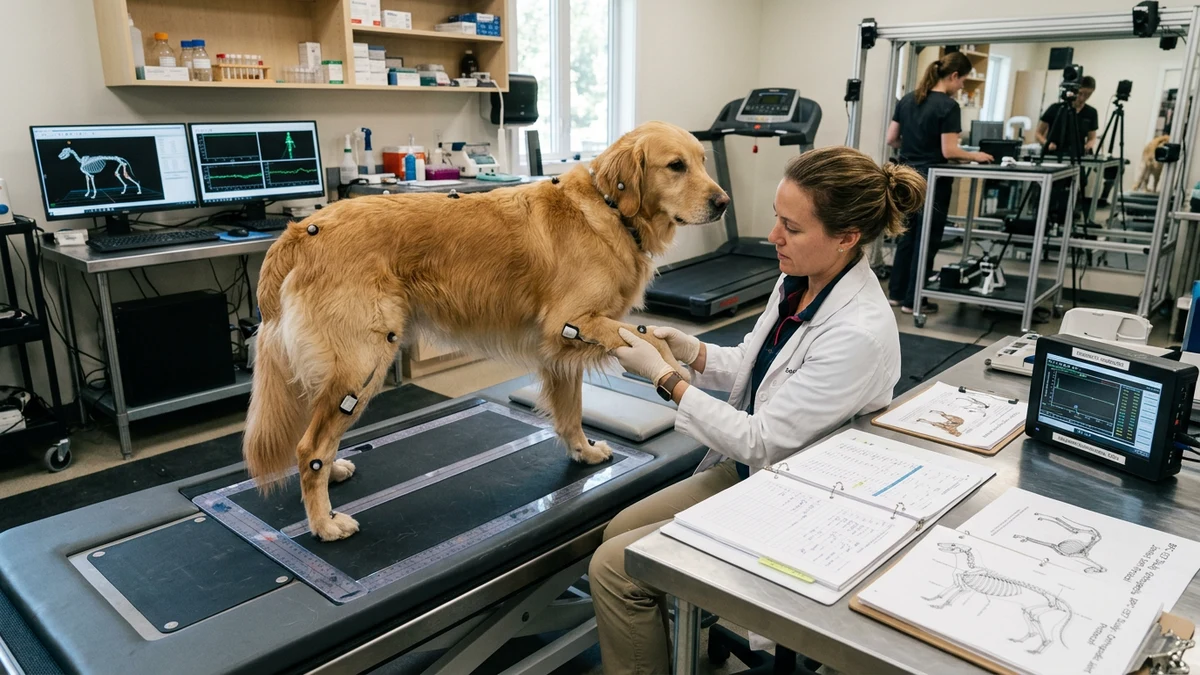

The intersection of BPC-157 dogs research and companion animal medicine is one of the more quietly compelling areas in veterinary science right now. BPC-157, a synthetic pentadecapeptide derived from a protective protein found in gastric juice, has accumulated a substantial body of pre-clinical data over the past three decades, almost entirely from rodent models. Yet the canine patient population presents with gastrointestinal pathologies that mirror those studied conditions with striking fidelity. Dogs develop inflammatory bowel disease, protein-losing enteropathy, NSAID-induced gastric erosions, and pancreatitis at rates that make them both a clinical concern and a scientifically interesting research species.
BPC-157 (Body Protection Compound-157) is a 15-amino acid sequence, stable in gastric acid, that has been studied for its effects on tissue healing, angiogenesis, and gastrointestinal mucosal integrity. It's not a naturally occurring peptide in the traditional sense, it's a synthetic analog of a sequence identified within human gastric juice, and its stability under acidic conditions has made it particularly interesting for oral administration research in animal models.
What draws veterinary researchers toward this compound is the specificity of the pre-clinical findings. This isn't a general healing peptide with vague cytoprotective claims. The rodent literature describes measurable outcomes in gastric ulcer healing, intestinal anastomosis integrity, fistula closure, and even neurological repair, which creates a research map that veterinary internists can read with genuine interest.
For a broader look at how peptides are being studied across veterinary species, see our research peptides veterinary medicine overview.
Dogs aren't just convenient laboratory animals. Their gastrointestinal anatomy and physiology occupy a middle ground between rodents and humans that makes them genuinely useful for translational research. The canine stomach has a similar glandular distribution to the human stomach. Dogs have a comparable gastric acid secretory profile, a similar mucosal defense architecture, and they develop spontaneous GI disease, not just experimentally induced disease.
Canine inflammatory bowel disease shares histopathological features with human IBD, including mucosal infiltration with lymphocytes and plasma cells, villous blunting in the small intestine, and altered tight junction protein expression. Dogs also develop NSAID-associated gastric ulceration at a clinically significant rate, a direct parallel to one of the primary models in which BPC-157 has been studied in rodents.
There's also the matter of size. A dog's GI tract allows for surgical interventions, endoscopic sampling, and pharmacokinetic studies that simply aren't feasible in a mouse. This isn't a minor point. It means that if BPC-157 research ever progresses toward larger animal models, the canine system offers a physiologically relevant and technically accessible platform.
The pre-clinical foundation for BPC-157 in gastrointestinal research is extensive. Studies published in journals including Current Pharmaceutical Design and World Journal of Gastroenterology have documented effects in several rodent GI injury models. The findings don't all point in the same direction with equal strength, but certain patterns have appeared repeatedly across independent research groups.
In gastric ulcer models, rodent data suggests BPC-157 accelerates mucosal healing, with proposed mechanisms involving upregulation of growth hormone receptor expression and modulation of nitric oxide pathways. Cytoprotective effects on the gastric mucosa have been studied in both alcohol-induced and NSAID-induced injury models, which is directly relevant to the canine clinical context where NSAID gastropathy is a common presentation.
Intestinal anastomosis studies are particularly interesting from a surgical perspective. Rodent model data suggests improved healing at anastomotic sites following BPC-157 administration, with some studies measuring bursting pressure and histological integrity as endpoints. For veterinary surgeons working with intestinal resection cases in dogs, this is the kind of finding that warrants attention, even if direct translation hasn't been established.
Fistula models represent another studied application. Colocutaneous and esophagocutaneous fistula healing has been examined in rat models, with pre-clinical findings indicating accelerated closure compared to controls. The mechanistic hypothesis centers on angiogenic promotion and fibroblast activity, though the precise signaling pathways remain an active area of investigation.
The neurological research on BPC-157 is less voluminous than the GI literature, but it's scientifically distinct enough to warrant its own consideration. Sciatic nerve crush models in rodents have been used to study peripheral nerve regeneration, and several papers have reported findings suggesting accelerated functional recovery and improved axonal integrity in BPC-157-treated animals compared to controls.
Spinal cord injury models have also appeared in the literature, with rodent data suggesting effects on motor function recovery and neuroprotective outcomes. The proposed mechanisms in these studies often involve modulation of dopaminergic and serotonergic systems, along with effects on nitric oxide synthesis. These aren't fully characterized pathways, and the research is preliminary by any honest assessment.
What makes this relevant to canine research is the clinical prevalence of neurological disease in dogs. Degenerative myelopathy, intervertebral disc disease, and traumatic nerve injury are among the more common and devastating conditions in companion animal neurology. There's no direct evidence from canine studies, but the rodent findings create a biological rationale for further investigation in larger animal models.
One acknowledged limitation here: the sciatic crush model in rats is a controlled, reproducible injury, while clinical nerve damage in dogs is heterogeneous in cause, severity, and anatomical location. Translating findings from one to the other requires considerably more than extrapolation.
Dogs metabolize drugs differently from rodents, and those differences matter when evaluating pre-clinical peptide data. Hepatic cytochrome P450 enzyme activity, renal filtration rates, and gastrointestinal transit times all differ across species. A peptide that achieves meaningful systemic exposure in a rat following oral administration may behave quite differently in a 30-kilogram Labrador.
Peptide bioavailability is a genuine challenge in this research space. Understanding how BPC-157 is absorbed, distributed, and cleared in canine physiology would require dedicated pharmacokinetic studies in dogs, and that data largely doesn't exist yet. For a deeper look at how researchers approach this problem, the discussion of peptide bioavailability in animal models covers the methodological considerations in useful detail.
Gastric pH also varies between species in ways that affect peptide stability and absorption. BPC-157's reported acid stability is one of its frequently cited properties in the rodent literature, but confirming that this property holds under canine gastric conditions would require direct measurement. Dogs have a highly variable gastric pH depending on fed versus fasted state, breed, and individual variation.
Body surface area scaling, which is commonly used to extrapolate rodent doses to larger species, has known limitations for peptides specifically, because peptides are subject to enzymatic degradation in ways that small molecules aren't. These aren't reasons to dismiss the research, they're reasons to be precise about what the existing data actually tells us.
The honest assessment of BPC-157 in canine research is that the canine data is essentially absent. What exists is a strong pre-clinical foundation in rodents, a biologically plausible rationale for studying similar effects in dogs, and a clinical patient population that presents with the exact disease categories the rodent literature has focused on.
The research gaps are substantial. There are no published pharmacokinetic studies in dogs. There are no controlled canine GI injury models using BPC-157 as an intervention. There are no canine neurological studies. The compound hasn't been evaluated for safety in dogs in any published peer-reviewed context. These aren't minor gaps, they represent the entire translational bridge that would need to be built before canine research could meaningfully extend the rodent findings.
What would be most valuable, from a research design perspective, is a pharmacokinetic characterization study in healthy dogs, followed by a controlled model of NSAID-induced gastric mucosal injury, which is both clinically relevant and methodologically well-established in veterinary research. Canine IBD models, while more complex, would represent a longer-term research opportunity given the histopathological parallels to human disease.
The neurological research path is even earlier stage. Establishing a standardized peripheral nerve injury model in dogs that mirrors the rodent sciatic crush protocol would require significant methodological development, but the clinical relevance to intervertebral disc disease and traumatic nerve injury makes it a scientifically defensible investment of research effort.
The canine patient population deserves the same quality of investigative attention that has been applied to rodent models. Dogs live with their people, they suffer from the same GI diseases that the pre-clinical BPC-157 literature has focused on, and they represent a physiologically meaningful step toward human translation. The rodent data has built a foundation. What's needed now is the disciplined, species-appropriate research to determine whether that foundation extends to our patients.
This article is for informational and research purposes only. Nothing in this content constitutes veterinary or medical advice, a treatment recommendation, or an endorsement of any specific compound, supplier, or protocol. Research peptides are investigational substances not approved for veterinary therapeutic use in most jurisdictions. Always consult a licensed veterinarian before making any clinical decisions. For research purposes only, not veterinary advice.