For research purposes only — not medical advice.
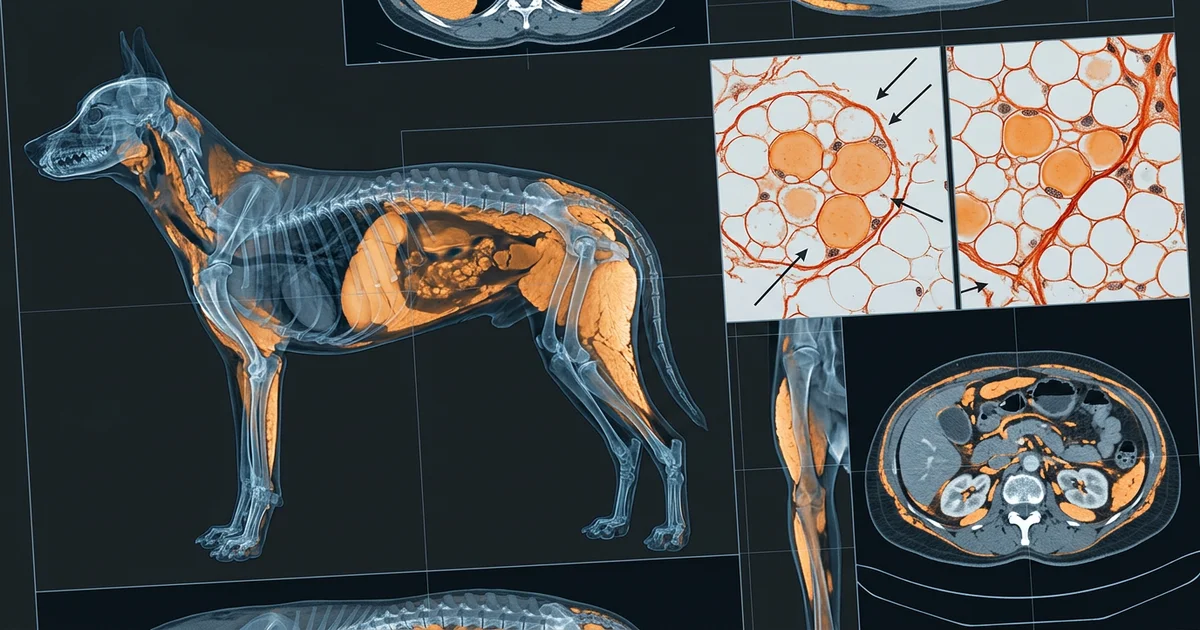
AOD-9604 canine obesity research sits at a genuinely interesting crossroads: a peptide originally developed for human metabolic applications is drawing attention in veterinary science circles, particularly among researchers studying adipose tissue regulation in dogs. AOD-9604 is a synthetic fragment derived from the C-terminal region of human growth hormone, specifically the amino acid sequence 176–191. It doesn't carry the full anabolic profile of growth hormone itself, which is part of what makes it appealing as a research subject. The compound appears to interact with fat metabolism pathways without producing the insulin-resistance concerns associated with full growth hormone administration. That distinction matters in animal models, and it matters especially in dogs, where obesity has become a well-documented clinical challenge with real consequences for joint health, cardiovascular function, and longevity.
Canine obesity rates have climbed steadily over the past two decades. Estimates from veterinary practice surveys suggest anywhere from 25 to 40 percent of companion dogs in developed countries carry excess body weight. The health implications aren't trivial: excess adiposity in dogs correlates with accelerated osteoarthritis progression, reduced respiratory efficiency, and metabolic dysregulation that mirrors type 2 diabetes-adjacent conditions in humans. Standard interventions — caloric restriction and increased physical activity — work in theory but face compliance problems in practice. Owners struggle to maintain dietary discipline, and many obese dogs have reduced mobility that limits exercise capacity. This gap between clinical need and practical solution is exactly why researchers have looked toward pharmacological or peptide-based approaches as potential adjuncts in controlled study settings.
The mechanism researchers focus on involves lipolysis, the process by which stored triglycerides in fat cells are broken down into free fatty acids and released into circulation. AOD-9604 appears to stimulate lipolytic activity in adipocytes through interaction with beta-adrenergic receptors, without triggering the same downstream IGF-1 signaling that full growth hormone activates. This selectivity is what distinguishes it from earlier growth hormone-based obesity research, which ran into problems with glucose dysregulation.
In rodent studies, which represent the most thoroughly documented preclinical data on this compound, AOD-9604 demonstrated measurable reductions in body fat percentage in obese animal models. The reductions occurred without significant changes in lean muscle mass, which is a meaningful distinction in obesity research. Losing lean tissue alongside fat is a common problem with caloric restriction alone, and preserving muscle matters for metabolic rate, mobility, and long-term weight maintenance. Whether this same profile translates cleanly to canine physiology is a question the research community hasn't fully answered yet.
Dogs differ from rodents in ways that complicate direct extrapolation. Their metabolic rate per kilogram of body weight, hormonal receptor distribution, and adipose tissue composition all have species-specific characteristics. A finding in a mouse model is a hypothesis generator for canine work, not a conclusion. Researchers who study peptide applications in veterinary contexts are generally careful to treat rodent data as directional evidence pending species-specific confirmation.
Dogs have a relatively well-characterized endocrine system, and their growth hormone axis shares meaningful structural similarities with that of humans. This is partly why dogs have long been used as large-animal models in cardiovascular and metabolic research. The growth hormone receptor in dogs responds to C-terminal growth hormone fragments in ways that parallel human receptor behavior, at least based on early comparative endocrinology work. That overlap is what makes AOD-9604 canine obesity research a plausible scientific direction rather than purely speculative territory.
Adipose tissue distribution in dogs also varies by breed in ways that have metabolic implications. Labrador Retrievers, Beagles, and Cocker Spaniels are among the breeds consistently identified as having higher obesity prevalence. Research published in veterinary journals has linked certain genetic variants in Labrador Retrievers to altered satiety signaling, specifically involving the POMC gene, which partially overlaps with the same neuroendocrine pathways that growth hormone fragments may influence. This isn't a direct mechanistic connection to AOD-9604, but it points toward shared biological terrain worth investigating.
Leptin resistance is another thread worth pulling. Obese dogs frequently exhibit elevated leptin levels alongside blunted leptin sensitivity, a pattern that mirrors human obesity pathophysiology. Some preclinical peptide research, including work adjacent to AOD-9604, has explored whether lipolysis-stimulating compounds can help break cycles of leptin resistance by reducing overall adipose burden. The hypothesis is straightforward: less fat tissue means lower baseline leptin output, which over time may allow receptor sensitivity to partially recover. This is speculative in canines specifically, but the mechanistic logic draws from reasonably solid human and rodent data.
It's honest to say the direct canine research on AOD-9604 is thin. Most of the published evidence base comes from rodent models and early-phase human clinical work conducted in the early 2000s, including trials that tested the compound for human obesity before the program was eventually deprioritized by its developer. Those human trials produced mixed results: some participants showed reductions in body fat, others didn't respond meaningfully, and the lack of consistent effect size contributed to the compound's pivot away from pharmaceutical development toward research use.
That pivot toward research use is actually relevant to the canine context. Because AOD-9604 is studied as a research peptide rather than a licensed veterinary drug, investigations into its application in animal models tend to appear in academic and practitioner literature rather than large-scale clinical trials. According to practitioners in the veterinary peptide research space, interest in the compound for canine metabolic applications has grown, but formal peer-reviewed studies remain limited. This is both a limitation and an opportunity: the research gap is real, but it means the field is genuinely open.
Related areas of investigation that often appear alongside AOD-9604 in veterinary metabolic research include GLP-1 receptor agonist work in dogs, studies on caloric restriction mimetics, and investigations into the role of adipokines in canine inflammation. AOD-9604 fits into a broader pattern of interest in compounds that target fat metabolism specifically, rather than appetite suppression, as a pathway to obesity management. Each of these approaches has a different mechanism and a different evidence profile, and they're not interchangeable.
Any honest treatment of this topic has to sit with the limitations. Species translation is the biggest one. The gap between rodent efficacy data and canine clinical outcomes is wide enough that practitioners in the field are right to be cautious. Dosing parameters, administration frequency, and bioavailability in dogs haven't been systematically characterized in published literature. What works in a controlled rodent study under standardized conditions doesn't automatically transfer to a living dog with breed-specific genetics, a varied diet history, and concurrent health conditions.
There's also the question of what "success" looks like in a canine obesity intervention. Body weight reduction is one metric, but researchers are increasingly interested in functional outcomes: improved mobility scores, reduced inflammatory markers, better insulin sensitivity indices. These endpoints require longer study durations and more sophisticated measurement than basic weight tracking, which raises the cost and complexity of conducting good canine research.
Comorbidities complicate things further. Many obese dogs that would be candidates for any kind of metabolic intervention also have hypothyroidism, orthopedic conditions, or age-related organ changes. Isolating the effect of a single compound in that context is difficult, and well-designed research needs to account for confounding variables that don't exist in clean animal models.
Despite the gaps, the interest in AOD-9604 canine obesity research isn't going away. The practical pressure is real: veterinarians treating obese dogs have limited pharmacological tools, and the ones that exist carry significant side effect profiles. A compound that selectively targets fat catabolism without affecting lean mass or triggering systemic hormonal disruption would be genuinely useful if its safety and efficacy in dogs could be demonstrated through rigorous study.
The peptide's stability profile is also a practical advantage from a research standpoint. AOD-9604 is relatively resistant to enzymatic degradation compared to full-length growth hormone, which simplifies some aspects of experimental design and storage. For researchers setting up animal trials, working with a compound that behaves predictably in laboratory conditions matters.
Comparative medicine is increasingly bidirectional. Insights from canine obesity research inform human metabolic science, and vice versa. Dogs live in shared environments with their owners, eat processed food, face sedentary lifestyles, and develop metabolic diseases that parallel human conditions in ways that spontaneous animal models often don't. That makes well-designed canine research intrinsically valuable beyond veterinary medicine, which is part of why funding interest from the broader metabolic research community has started to reach into this area.
The picture that emerges from the available evidence is one of a compound with plausible mechanisms, a supportive but incomplete preclinical foundation, and a clear need for species-specific research before any conclusions can be drawn about its utility in canine obesity management. That's not a criticism of the research direction. It's an accurate description of where the science stands, and it's a reasonable place from which to design the next generation of studies.
Disclaimer: This article is for informational and research purposes only. It does not constitute veterinary or medical advice, and nothing in this article should be interpreted as a recommendation for any clinical intervention in animals or humans. AOD-9604 is a research compound and is not approved by any regulatory authority for veterinary or human therapeutic use. Always consult a licensed veterinarian or qualified healthcare professional before making any decisions related to animal health.