For research purposes only — not medical advice.
Studies involving delta sleep inducing peptide animal models have shaped much of what researchers understand about the neurochemical regulation of sleep architecture. First isolated in the 1970s from rabbit cerebral venous blood during slow-wave sleep, DSIP is a nonapeptide that caught the attention of sleep scientists precisely because it appeared to act as more than a passive byproduct of sleep. It seemed to participate in orchestrating it. Decades of animal research have since mapped its distribution across brain regions, its interaction with circadian timing systems, and its apparent capacity to influence specific sleep stages in ways that simpler sedative compounds do not replicate.
This article is for informational and research purposes only. DSIP is an active subject of preclinical investigation and is not approved for human therapeutic use in most jurisdictions. Nothing here constitutes medical advice, nor should any content be interpreted as a recommendation to use, obtain, or administer any peptide compound. Readers with health concerns should consult qualified medical professionals.
DSIP is a nine-amino-acid peptide with the sequence Trp-Ala-Gly-Gly-Asp-Ala-Ser-Gly-Glu. That sequence is deceptively simple for something that has generated as much scientific discussion as it has. What makes it unusual is its apparent amphiphilic nature, which allows it to cross the blood-brain barrier more readily than many other peptides of similar size. This property has made it a useful research probe for exploring peptide-based neuromodulation.
Immunohistochemical studies in rodents have detected DSIP-like immunoreactivity in the hypothalamus, limbic structures, the brainstem, and even peripheral tissues including the pituitary and adrenal glands. This distribution immediately complicated early assumptions that it was purely a sleep-promoting substance. A compound present in the adrenal gland is likely doing something related to stress response, not just nocturnal rest cycles. That complexity is part of what has kept researchers interested. The peptide doesn't sit neatly in one functional category.
Rats and rabbits have served as the primary animal models for mapping this distribution, though some work has extended to cats and, in more limited contexts, non-human primates. The consistency of immunoreactive findings across species suggests that whatever role DSIP plays, it's phylogenetically conserved to a meaningful degree.
The original 1974 work by Monnier and colleagues, conducted in rabbits, described DSIP as capable of inducing slow-wave sleep when introduced into the cerebral circulation. That finding launched a field. Subsequent research attempted to replicate and refine it, with mixed but instructive results.
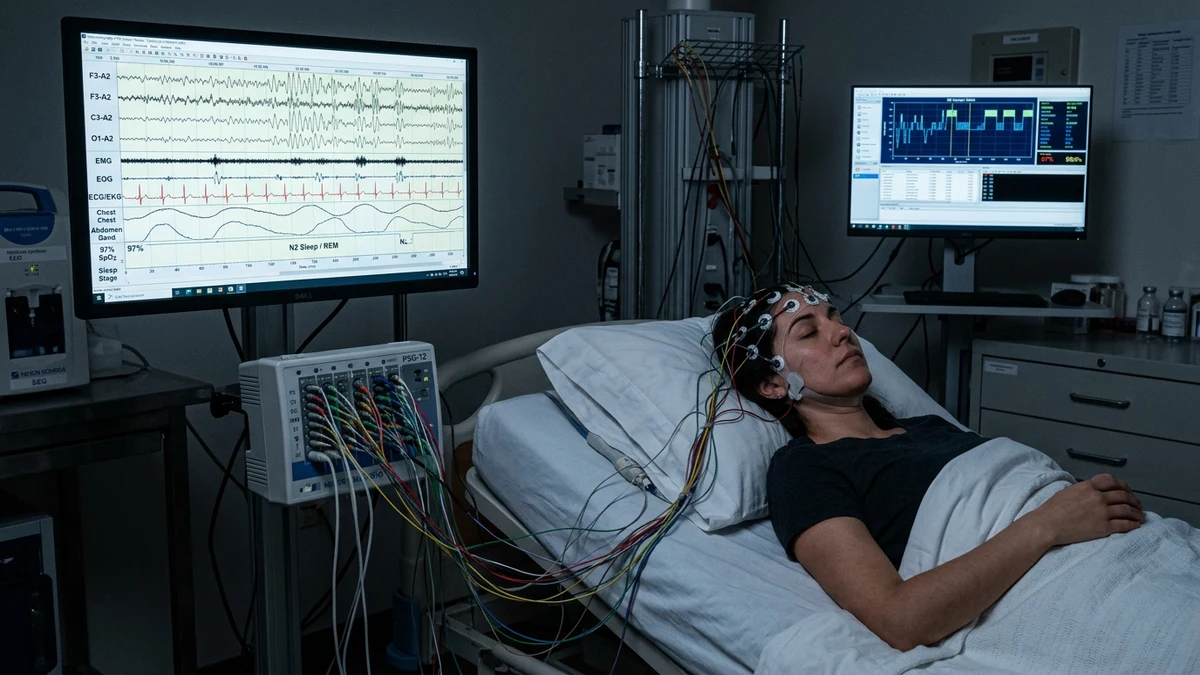
In rodent electroencephalography studies, DSIP administration has been associated with increases in delta wave activity, the slow oscillations (0.5 to 4 Hz) that characterize deep non-REM sleep. This is distinct from simply sedating an animal. Sedative compounds tend to suppress certain frequency bands indiscriminately or produce sleep states that don't match normal sleep architecture on EEG. Research suggests that DSIP-related effects, when observed, more closely resemble a shift toward physiological slow-wave sleep rather than drug-induced unconsciousness.
The relationship between DSIP and REM sleep is less straightforward. Some animal studies have reported no significant change in REM duration following DSIP administration, while others have noted modest alterations depending on the timing of delivery relative to the animal's circadian phase. This phase-dependence is a recurring theme in the literature and represents one of the more honest complications in interpreting the data. A peptide that only works under specific circadian conditions is functionally different from one with consistent effects, and that distinction matters for understanding what DSIP actually does versus what it can be made to do under controlled experimental conditions.
Researchers studying related peptide systems, including work on growth hormone-releasing peptides and orexin-based pathways, have occasionally noted that DSIP appears to interact with neuroendocrine axes in ways that may indirectly influence sleep pressure. This is an area where the preclinical data is genuinely suggestive but not yet resolved.
The presence of DSIP-like immunoreactivity in adrenal tissue was never fully explained by a pure sleep-regulation hypothesis. Animal research has pointed toward a role for DSIP in modulating the hypothalamic-pituitary-adrenal axis, the system governing cortisol and corticosterone release in response to stress.
Studies in rats subjected to chronic stress protocols have examined whether DSIP administration influences baseline or stress-induced corticosterone levels. The findings suggest the peptide may exert some modulatory influence on HPA axis activity, though the mechanistic pathway remains under investigation. One plausible interpretation is that DSIP acts as part of a larger feedback system, one where the transition into slow-wave sleep is linked to downregulation of stress hormones, and DSIP participates in that coordination rather than acting as a direct sleep switch.
This framing aligns with broader research on sleep and stress physiology. Sleep deprivation reliably elevates glucocorticoid levels in animal models, and interventions that restore deep sleep tend to normalize those levels. Whether DSIP plays a causal role in that normalization, a permissive one, or simply correlates with the process is still an open question. It's a genuine limitation of the current literature, and researchers in this area tend to acknowledge it.
The connection to stress physiology also makes DSIP relevant to research on peptides involved in recovery and adaptation, subjects that have drawn interest from exercise science researchers examining sleep as a recovery variable.
Sleep research in animal models depends heavily on circadian timing. Mice are nocturnal; rats are nocturnal; the light-dark cycle governs when experiments are run and what baseline sleep architecture looks like before any intervention. DSIP research has not always been rigorous about reporting these details, which partly explains why some early replication attempts produced inconsistent results.
More carefully designed studies have reported that the sleep-promoting effects of DSIP in rodents are most apparent during the animal's subjective day, when sleep pressure is naturally lower and slow-wave sleep might need more active facilitation. During the active phase, when rats are already inclined toward wakefulness, DSIP's effects appear attenuated or absent. This is actually a scientifically interesting finding, because it suggests the peptide is not simply a sedative but may be modulating sleep-wake systems that are already near a threshold.
Research on circadian peptide systems, including related work on vasoactive intestinal peptide and neuropeptide Y in the suprachiasmatic nucleus, has provided a partial mechanistic framework for understanding how small peptides can act as modulators rather than drivers of biological rhythms. DSIP research sits within that broader context, even if its specific receptor or receptors haven't been definitively characterized. The lack of a confirmed high-affinity DSIP receptor remains one of the field's unresolved questions.
Some researchers have speculated that DSIP may act through opioid receptor subtypes or through modulation of GABA-ergic tone, but neither hypothesis has been confirmed with the kind of receptor-binding specificity that would satisfy contemporary standards. The honest assessment is that mechanism is an open question, and any account that presents it as settled is overstating the evidence.
DSIP doesn't exist in a vacuum within the sleep peptide literature. Research on other endogenous sleep-regulatory peptides, including uridine, adenosine-based sleep factors, and muramyl peptides derived from bacterial cell walls, emerged around the same period and has followed a similar arc: initial excitement, replication challenges, and then more measured long-term investigation.
What distinguishes DSIP from some of those candidates is its persistence in the literature. It continues to appear in studies examining neuroprotection, stress modulation, and neuroendocrine regulation, not just in sleep-specific contexts. Research suggests that this breadth of apparent function may reflect a modulatory role across several interconnected systems rather than a single, narrow mechanism.
The overlap with recovery-focused research is worth noting in a practical sense. Animal studies examining the relationship between deep sleep, tissue repair processes, and growth hormone secretion have occasionally incorporated DSIP as a variable. That intersection with growth hormone-related peptide research is one reason DSIP appears in literature searches that aren't strictly about sleep, and it's a connection that researchers across fields are slowly mapping out.
There's also methodological relevance here. DSIP's relative stability compared to some other neuropeptides, and its ability to cross the blood-brain barrier, has made it a useful tool for researchers designing experiments around peptide CNS access. Even studies not primarily about sleep have used DSIP as a reference compound or comparator for those properties.
The accumulated body of animal research on DSIP is substantive but imperfect. Inconsistencies in preparation, dosing protocols across studies, and variability in experimental design have made meta-analytic interpretation difficult. That's not a reason to dismiss the literature. It's a reason to read it carefully, with attention to which findings have been replicated under controlled conditions and which remain single-lab observations waiting for broader confirmation.
This article is for informational and research purposes only. The compounds and mechanisms discussed are subjects of ongoing preclinical research. Nothing in this article should be interpreted as medical advice, endorsement of any product, or guidance on human use of any substance.